
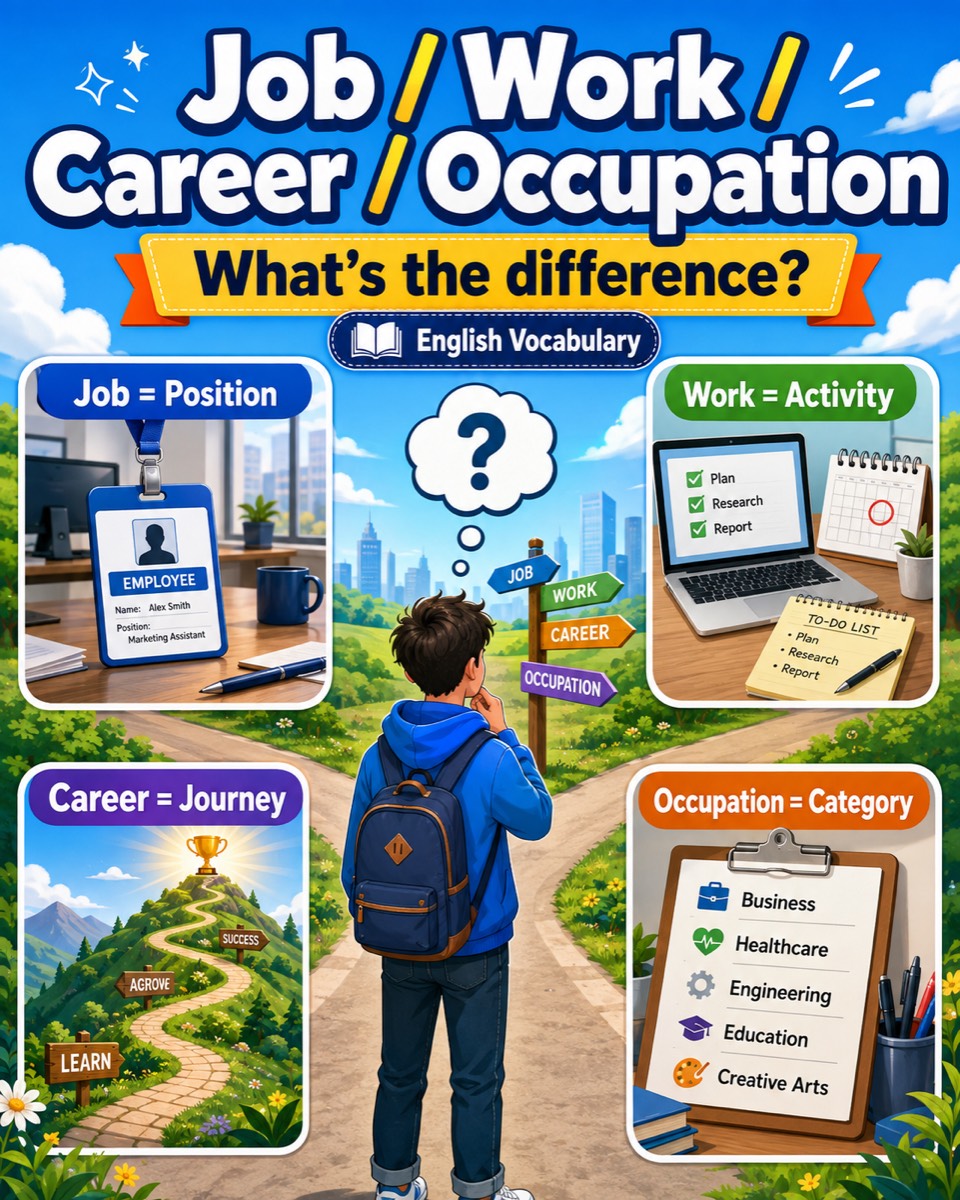
The words job, work, career, and occupation are closely related, but they describe different aspects of working life.
Here is the basic difference:
- job: a specific paid position or task
- work: the activity or tasks you do
- career: your long-term professional journey
- occupation: your formal type of employment
Job: a specific position
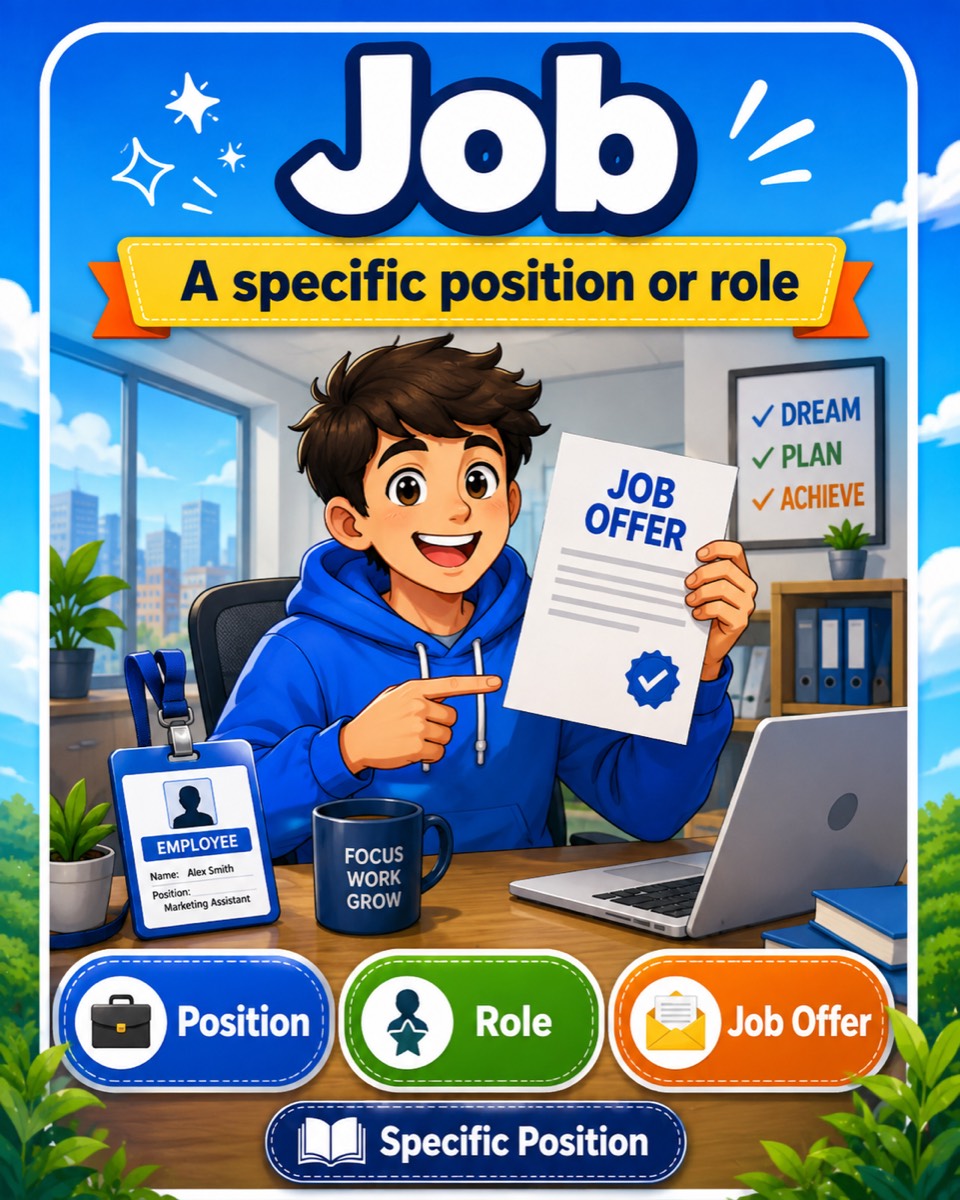
A job is a particular position that someone is paid to do. It is a countable noun.
I’m looking for a new job.
She has two part-time jobs.
Common expressions include:
- get a job
- find a job
- apply for a job
- lose your job
- quit your job
- change jobs
- job interview
- job offer
- job description
Job can also mean a particular task or the quality of someone’s performance.
I have a few jobs to finish around the house.
You did a great job!
Work: activity and responsibilities
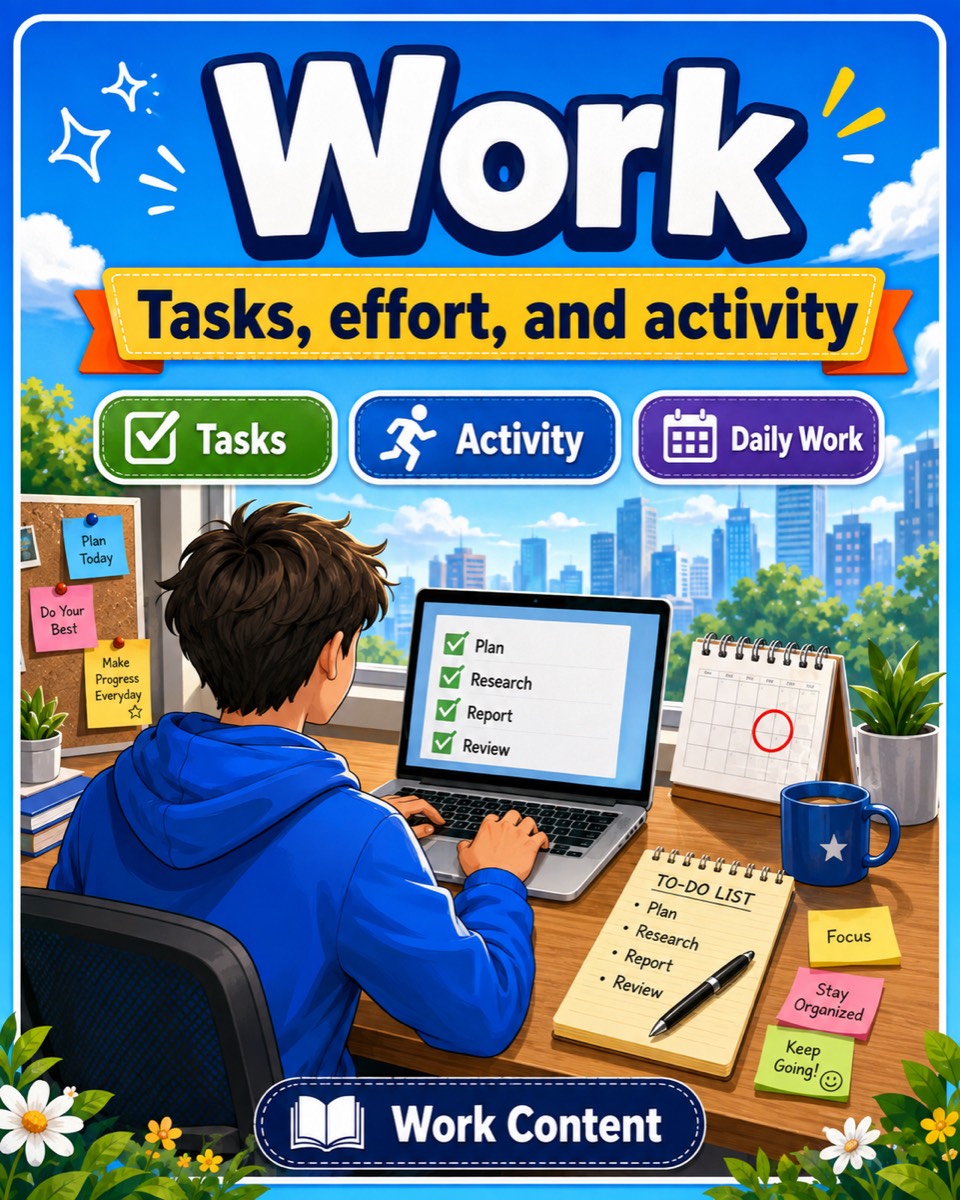
Work usually refers to the activity of working or the tasks that need to be completed. In this meaning, it is normally uncountable.
I have a lot of work to do.
Work has been stressful recently.
I start work at nine.
Do not usually say:
❌ I have many works to do.
Use:
✅ I have a lot of work to do.
✅ I have many tasks to complete.
Work is also a verb.
I work for a technology company.
She works as a teacher.
He works from home twice a week.
Compare:
I like my job.
This usually means you like your current position, employer, or working conditions.
I like my work.
This usually means you like the activities and responsibilities involved in what you do.
A person might therefore say:
I enjoy my work, but I don’t like my current job.
They may enjoy the profession itself but dislike their employer, salary, schedule, or workplace.
Career: a long-term professional journey
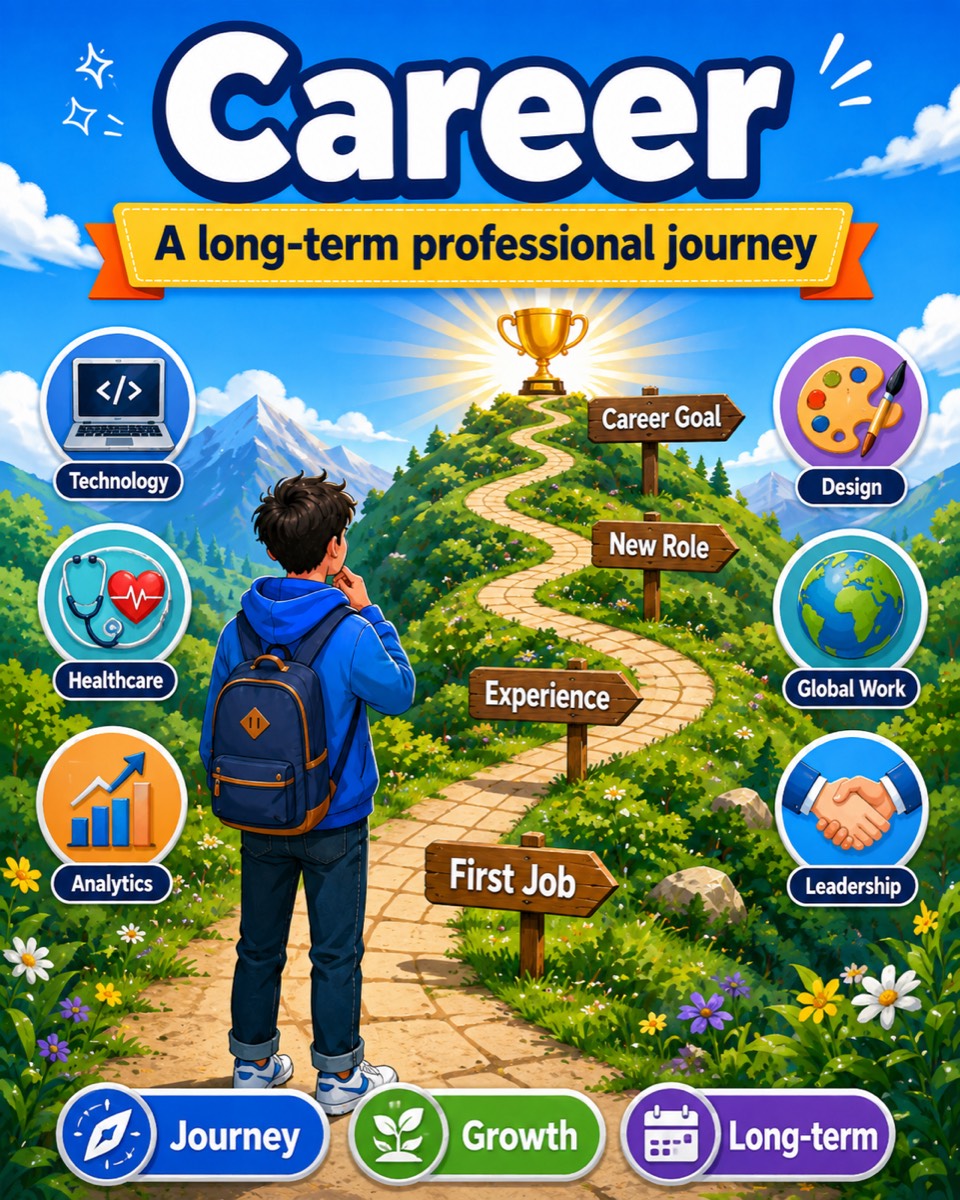
A career is the long-term path of a person’s professional life. It can include several jobs, promotions, employers, and even changes in direction.
She started her career as a nurse.
He wants to pursue a career in software engineering.
She changed careers at the age of forty.
A useful way to remember the difference is:
A job is one position. A career is the larger journey.
Common expressions include:
- start a career
- build a career
- pursue a career
- choose a career
- change careers
- career path
- career development
- career goal
- career opportunity
Changing jobs and changing careers are not the same.
I changed jobs.
This usually means you moved to another company or position.
I changed careers.
This means you moved into a different profession or field.
Occupation: a formal job category
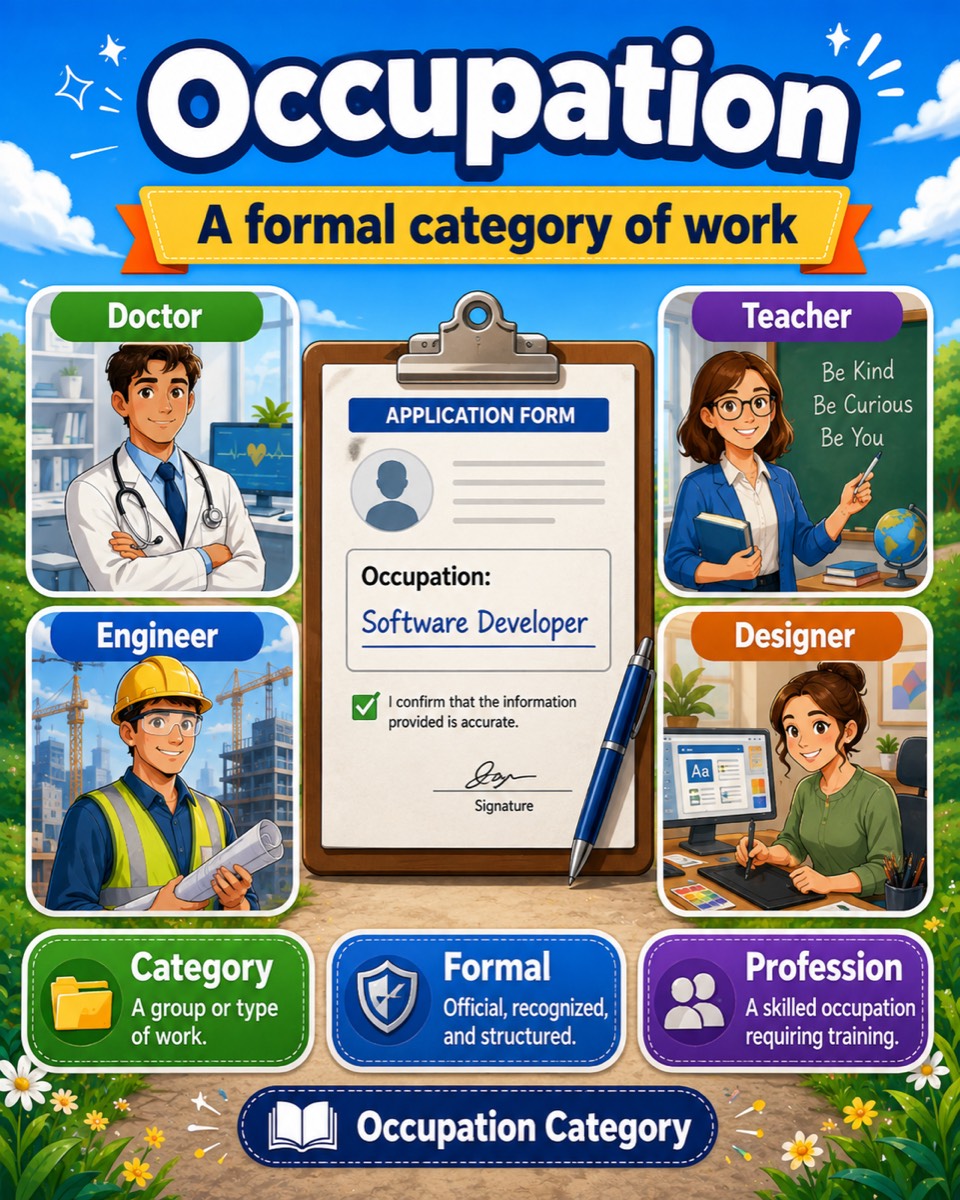
Occupation is a formal word for the type of work a person does.
It is commonly used in:
- application forms
- surveys
- visa documents
- government records
- insurance forms
- demographic statistics
Please state your occupation.
What is your current occupation?
In everyday conversation, people are more likely to ask:
What do you do?
What do you do for a living?
“What is your occupation?” is correct, but it may sound like a question from a form or official interview.
Quick comparison
| Word | Main meaning | Typical context |
|---|---|---|
| job | A specific position or task | Hiring, employment and job changes |
| work | The activity or tasks you do | Responsibilities and workload |
| career | A long-term professional journey | Growth, planning and career changes |
| occupation | A formal category of employment | Forms, surveys and official records |
One person, four words
Imagine that Emma is an architect.
Emma has a job at an international design company.
Her job is her current position.
Her work includes designing buildings and meeting clients.
Her work is what she actually does.
She hopes to build a successful career in architecture.
Her career is her long-term professional journey.
Her occupation is architect.
Her occupation is her formal professional category.
Common mistakes
#### Mistake 1
❌ I have many works today.
Use:
✅ I have a lot of work today.
#### Mistake 2
❌ I found a new work.
Use:
✅ I found a new job.
#### Mistake 3
❌ My job is a teacher.
Use:
✅ I am a teacher.
✅ I work as a teacher.
✅ My job is teaching.
#### Mistake 4
Do not confuse:
change jobs
with:
change careers
The first usually means moving to another position or employer. The second means entering a different profession.
An easy way to remember
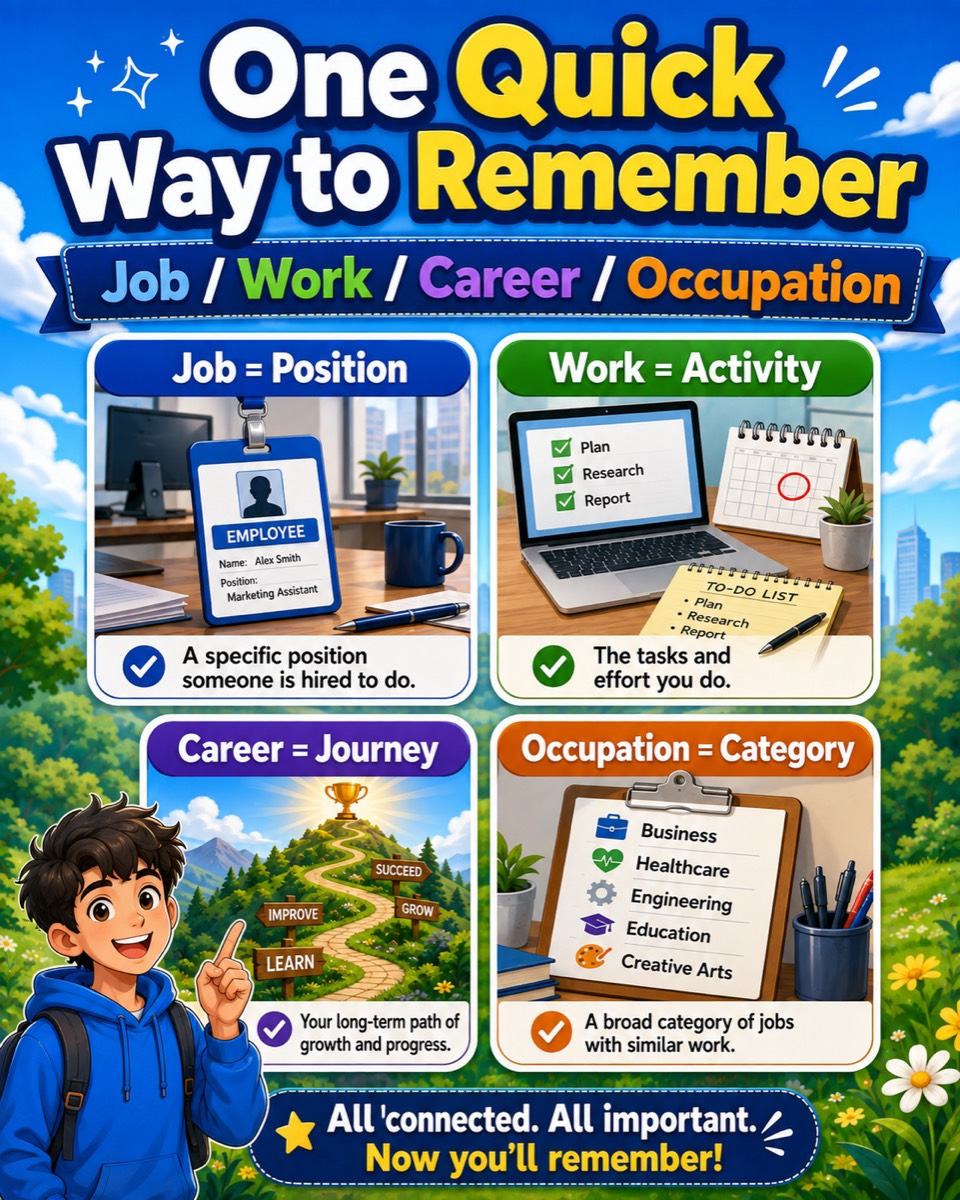
- Job = position
- Work = activity
- Career = journey
- Occupation = category
You do work at a job while building a career in an occupation.
Mini quiz
Choose job, work, career, or occupation.
- I have a lot of ______ to finish before Friday.
- She is applying for a new ______.
- He wants to build a ______ in international business.
- Please enter your ______ on the application form.
- She changed ______ several times before becoming a manager.
- After ten years in banking, he decided to change ______.
Answers
- work
- job
- career
- occupation
- jobs
- careers
Conclusion
Although job, work, career, and occupation can all relate to employment, they are not interchangeable.
- A job is a specific position.
- Work is the activity or tasks you perform.
- A career is your long-term professional journey.
- An occupation is the formal category of work you do.
The most useful sentence to remember is:
You can change your job without changing your career.